

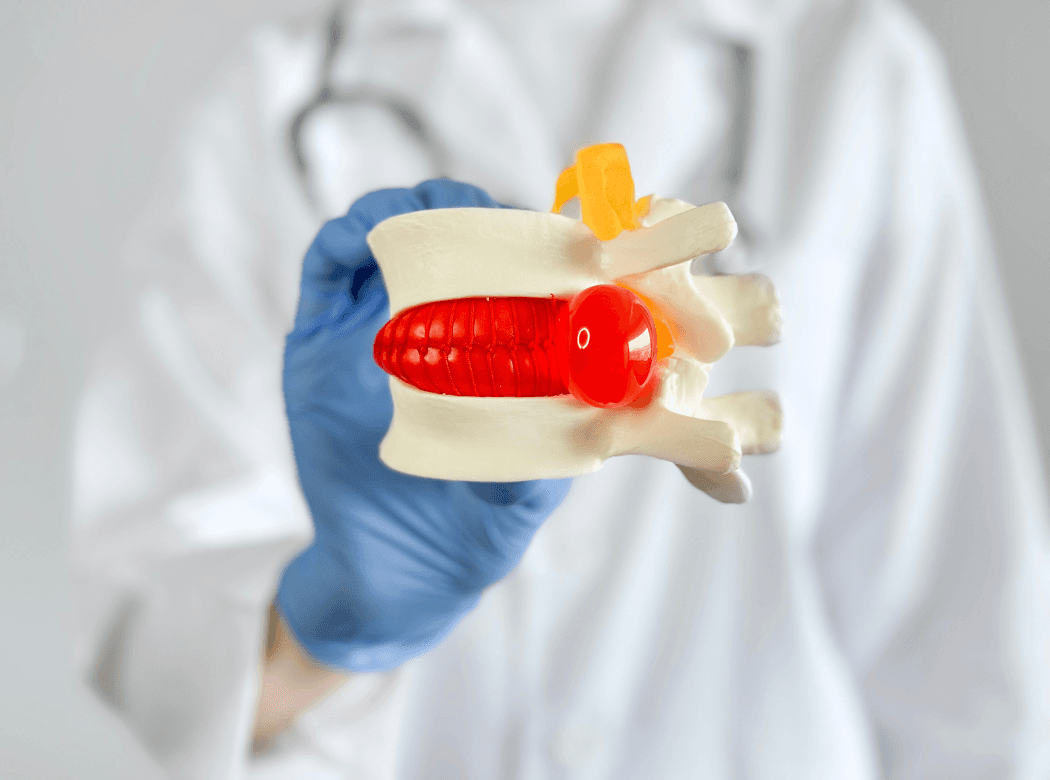
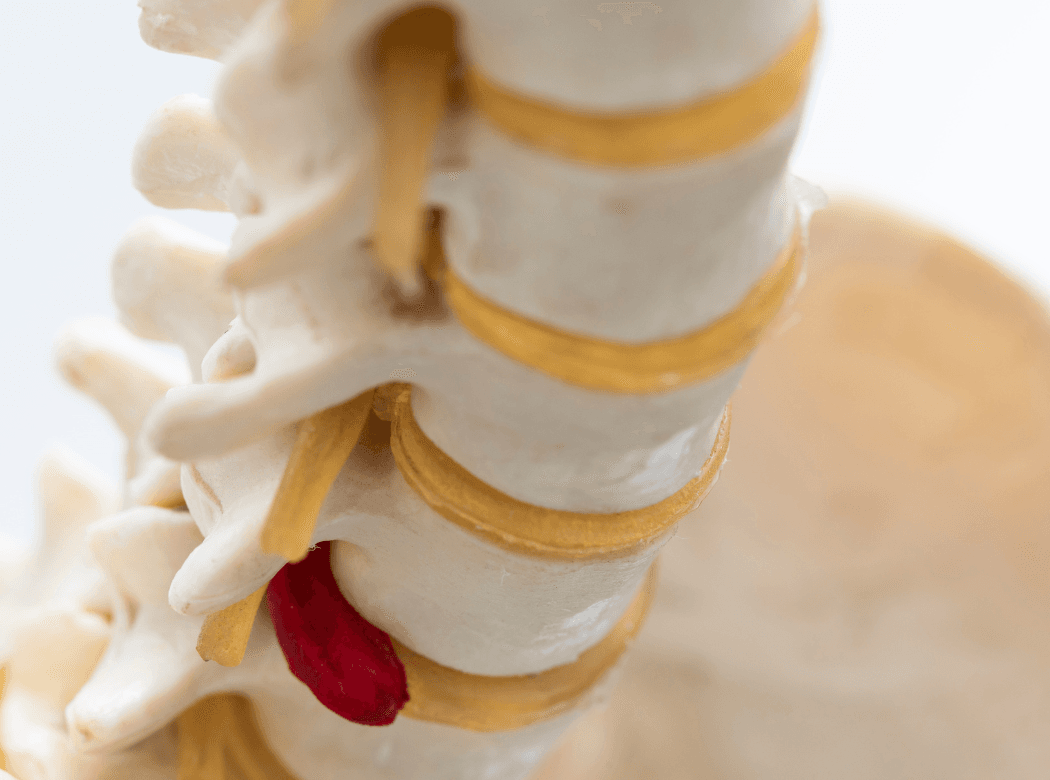
Herniated Disc Surgery in Dallas, TX

A herniated disc can place pressure on nearby spinal nerves, leading to back or neck pain, numbness, tingling, weakness, or pain that travels into the arms or legs. When symptoms interfere with movement, work, sleep, or everyday activities and non-surgical care has not provided enough relief, surgical evaluation may be appropriate.

At AdvancedCare Surgery Centers, we provide herniated disc surgery in Dallas for people experiencing nerve compression and related symptoms from damaged spinal discs. Treatment is based on the location of the herniation, severity of symptoms, neurological findings, imaging results, and response to previous care, with minimally invasive options available when appropriate.

Illustration of a vertebroplasty procedure on a vertebral compression fracture
Surgical team performing a vertebroplasty procedure

What is Herniated Disc Surgery?

Herniated disc surgery is performed to relieve pressure on a spinal nerve caused by disc material extending beyond its normal position. The procedure generally removes the portion of the disc pressing against the affected nerve when preserving healthy surrounding structures whenever possible.

The surgical technique depends on if the herniated disc affects the cervical or lumbar spine, the location of nerve compression, and the overall stability of the treated spinal level. Microdiscectomy, discectomy, decompression, and other procedures may be used based on the findings identified during evaluation.

SCHEDULE APPOINTMENT

What Causes a Herniated Disc?

Age-Related Disc Degeneration

Spinal discs naturally lose flexibility and hydration with age, making them more vulnerable to small tears or damage. These changes can increase the likelihood of disc material pushing outward.

Repetitive Bending and Twisting

Frequent bending, twisting, or rotating movements can place repeated stress on the spinal discs. Over time, this pressure may weaken the outer disc layer and contribute to herniation.

Heavy Lifting

Lifting heavy objects with poor body mechanics can place excessive pressure on the spine. Sudden strain may cause a weakened disc to bulge or herniate and affect nearby nerves.

Sudden Spinal Injury

Falls, accidents, or other traumatic injuries can place unexpected force on the spine. This sudden impact may damage a spinal disc and cause the inner material to move beyond its normal position.

Physical Stress on the Spine

Repeated physical strain from demanding activities can place additional pressure on spinal discs. Ongoing stress may contribute to disc wear and increase the risk of herniation.

Weakened Spinal Discs

Discs that have already become worn or damaged are more likely to develop tears in the outer layer. This can allow the softer inner material to extend outward and irritate nearby nerves.

Repetitive Work Activities

Jobs involving frequent lifting, pushing, pulling, bending, or twisting can place repeated strain on the spine. These movements may contribute to disc damage over time.

Poor Lifting Technique

Bending from the waist or twisting when lifting can place uneven pressure on spinal discs. Using improper lifting techniques repeatedly may increase the chance of disc injury or herniation.

Common Symptoms of a Herniated Disc

Symptoms depend on the location of the damaged disc and the nerves being affected. Lumbar disc herniation commonly causes symptoms in the lower back and legs, while cervical disc herniation may affect the neck, shoulders, arms, and hands. Common symptoms may include:

  • Lower back or neck pain
  • Pain traveling into an arm or leg
  • Sciatica
  • Numbness or tingling
  • Muscle weakness
  • Burning or sharp nerve pain
  • Difficulty walking or standing
  • Reduced movement
  • Symptoms that worsen with certain activities

When Is Surgery Needed for a Herniated Disc?

Many herniated discs can improve without surgery, so an operation is not automatically required after diagnosis. Surgery may become an option when significant symptoms continue despite medications, physical therapy, injections, or other conservative treatments, or when nerve compression causes progressive neurological problems. A herniated disc surgeon in Dallas may evaluate surgery when a person experiences:

  • Severe radiating nerve pain
  • Progressive muscle weakness
  • Continued numbness or tingling
  • Difficulty walking or standing
  • Symptoms affecting normal activities
  • Limited improvement with non-surgical care
  • Significant nerve compression on imaging

Types of Herniated Disc Surgery

Surgical treatment depends on the affected spinal level, the severity of nerve compression, and the location of the damaged disc. The procedure is selected based on imaging findings, symptoms, and the amount of disc material pressing on nearby nerves.

Microdiscectomy

A minimally invasive procedure commonly used for lumbar disc herniation. A small portion of herniated disc material is removed to relieve pressure on the affected nerve root, using specialized visualization and smaller instruments through a limited opening.

Lumbar Discectomy

Removes the portion of a lower-back disc pressing against a spinal nerve. Discectomy can help relieve the nerve compression responsible for leg pain, sciatica, numbness, or weakness.

Minimally Invasive Discectomy

Uses tubular dilators, a microscope, or an endoscope to reach the affected disc through a smaller surgical corridor. This approach suits certain herniations, though not every spinal condition can be treated this way.

Cervical Herniated Disc Surgery

Focuses on disc herniation in the neck that compresses spinal nerves or the spinal cord. The surgical approach may be from the front or the back of the neck depending on the location of the disc problem and other anatomical factors.

Laminectomy or Laminotomy With Discectomy

Some herniated discs require removing a small portion of bone to reach the compressed nerve and damaged disc. A laminotomy creates a smaller opening, while a laminectomy removes more of the lamina when additional decompression is needed.

Who May Be a Candidate for Herniated Disc Surgery?

Surgical treatment may be appropriate when a herniated disc causes significant nerve compression and symptoms do not improve enough with conservative care. A complete evaluation helps determine if surgery can treat the specific source of pain or neurological symptoms. Candidates may experience:

Radiating arm or leg pain
Muscle weakness
Numbness or tingling
Difficulty walking
Progressive neurological changes
Reduced ability to complete normal activities
Symptoms continuing after non-surgical treatment
Confirmed nerve compression on diagnostic imaging
Sciatica caused by lumbar disc herniation

How Herniated Disc Surgery Is Performed

Herniated disc surgery is performed to remove or reduce disc material pressing on nearby spinal nerves. A spine surgeon near me can evaluate the affected disc and determine the appropriate surgical approach based on symptoms and imaging findings.

1. Diagnostic Evaluation

Symptoms, neurological function, medical history, and diagnostic imaging are reviewed to identify the affected disc and compressed nerve.

2. Surgical Planning

The surgeon determines whether microdiscectomy, discectomy, decompression, or another surgical technique is appropriate.

3. Anesthesia

Anesthesia is administered according to the procedure and surgical plan.

4. Accessing the Affected Disc

A surgical opening is created to reach the spinal level where the herniation is compressing the nerve.

5. Identifying the Compressed Nerve

Specialized instruments and visualization are used to locate the affected nerve and herniated disc material.

6. Removing Herniated Disc Material

The portion of the disc responsible for nerve compression is carefully removed to create more space around the nerve.

7. Confirming Decompression

The surgical area is examined to confirm that the targeted nerve has been adequately decompressed.

8. Closing the Surgical Area

The incision is closed and recovery begins based on the procedure performed and the person's overall health.

Recovery After Herniated Disc Surgery

Recovery varies depending on the type of procedure, location of the herniated disc, severity of nerve compression, overall health, and healing response. Activity is increased according to the surgical plan, when lifting, bending, work duties, physical therapy, medications, incision care, and follow-up appointments are managed according to recovery progress.

Some minimally invasive procedures may have a different recovery course than more extensive decompression or fusion surgery, so return-to-work and normal activity timelines should be based on the specific operation performed.

Schedule a Herniated Disc Surgery Evaluation in Dallas

Back or neck pain that travels into the arms or legs, numbness, tingling, weakness, or difficulty walking may indicate nerve compression from a herniated disc. When these symptoms continue despite non-surgical treatment, a surgical evaluation can help determine the next appropriate step.

Contact AdvancedCare Surgery Centers to schedule an evaluation for herniated disc surgery in Dallas, TX and learn which treatment approach may be appropriate for your spinal condition.

Frequently Asked Questions